
Fressingfield Oily Rag Club -
A Unique Organisation
Fressingfield Oily Rag Club -
A Unique Organisation
Paul Scott writes….
……...Gilbert Sills recent visit to FORC in which he talked about the
Transit SuperVan reminded me of my own creation….
In the late 1970s I was part of a group of young tearaways indulging in Custom Vans, a thing that had taken off pretty big in the USA. The USA Vanners were focussed on wild or really neat paint jobs, trick body mods such as roof chops, lowering, raising, Interiors of many designs, etc.
The emphasis of the particular faction that I was involved in “Fine City Vans” was generally partying, shoehorning the biggest engines we could come across into whatever vans we could lay our hands on at the time and then convoying all over the country and partying with similar like minded “Youths”.
I decided to completely rebuild a totally worn out Essex 3.0 V6 and Borg Warner 35 Auto Trans and mid mount it in my Transit. Whist rummaging about in Medler’s scrapyard in 1977, I espied a rusted out Daimler Majestic Major. There was an engine still in it!
The Daimler V8s were held in great esteem by us Vanners because of their legendary build quality, awesome V8 sound, and pretty nice looks with all that alloy on show. I decided that I just had to have this big one, which were about as common as Unicorns at that time. I cost me 120 quid. “Gasp! I hope the transmission is included at that price”, I spluttered.
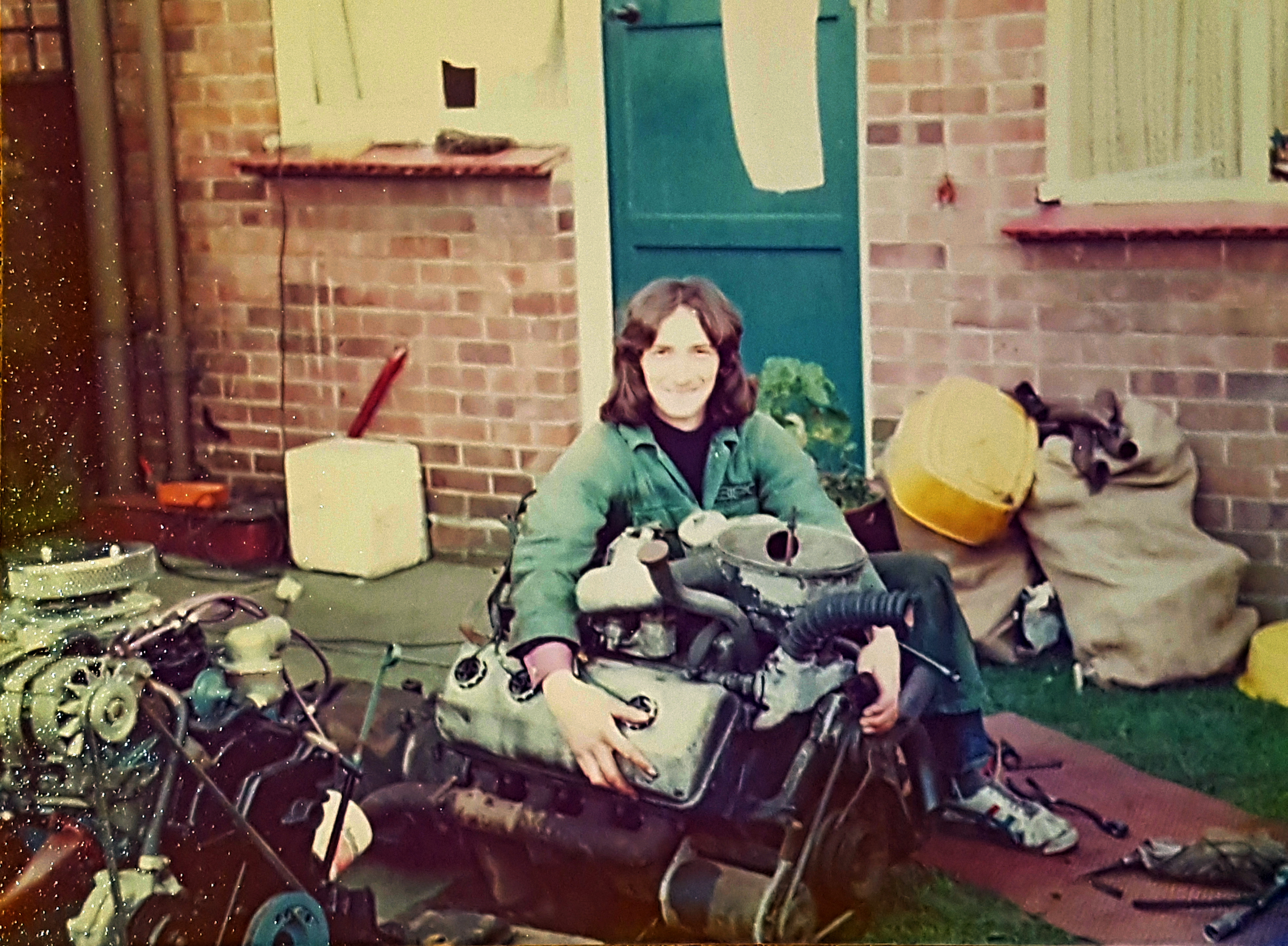
I love this engine
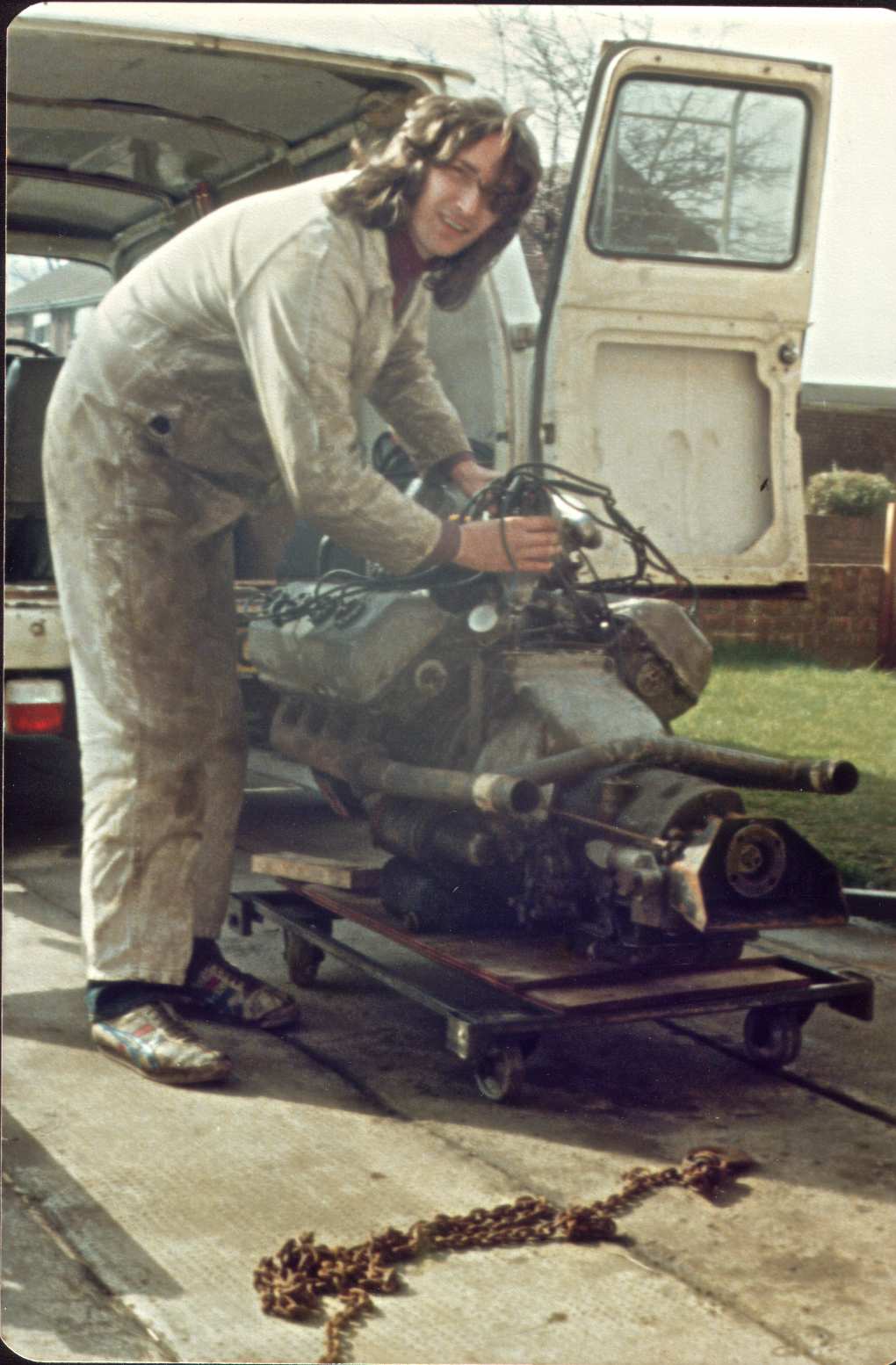
Hippy with Daimler V8
Having got this thing home and dragged it into Mother’s linen line patch, I realised that it would couple up perfectly to the Jag MK10 rear suspension that I had mocked up with the then completed Ford V6. After a bit of measuring up between the main chassis rails, and the space available behind the main cab cross-member, I realised there was clearly only one way I could go with this!
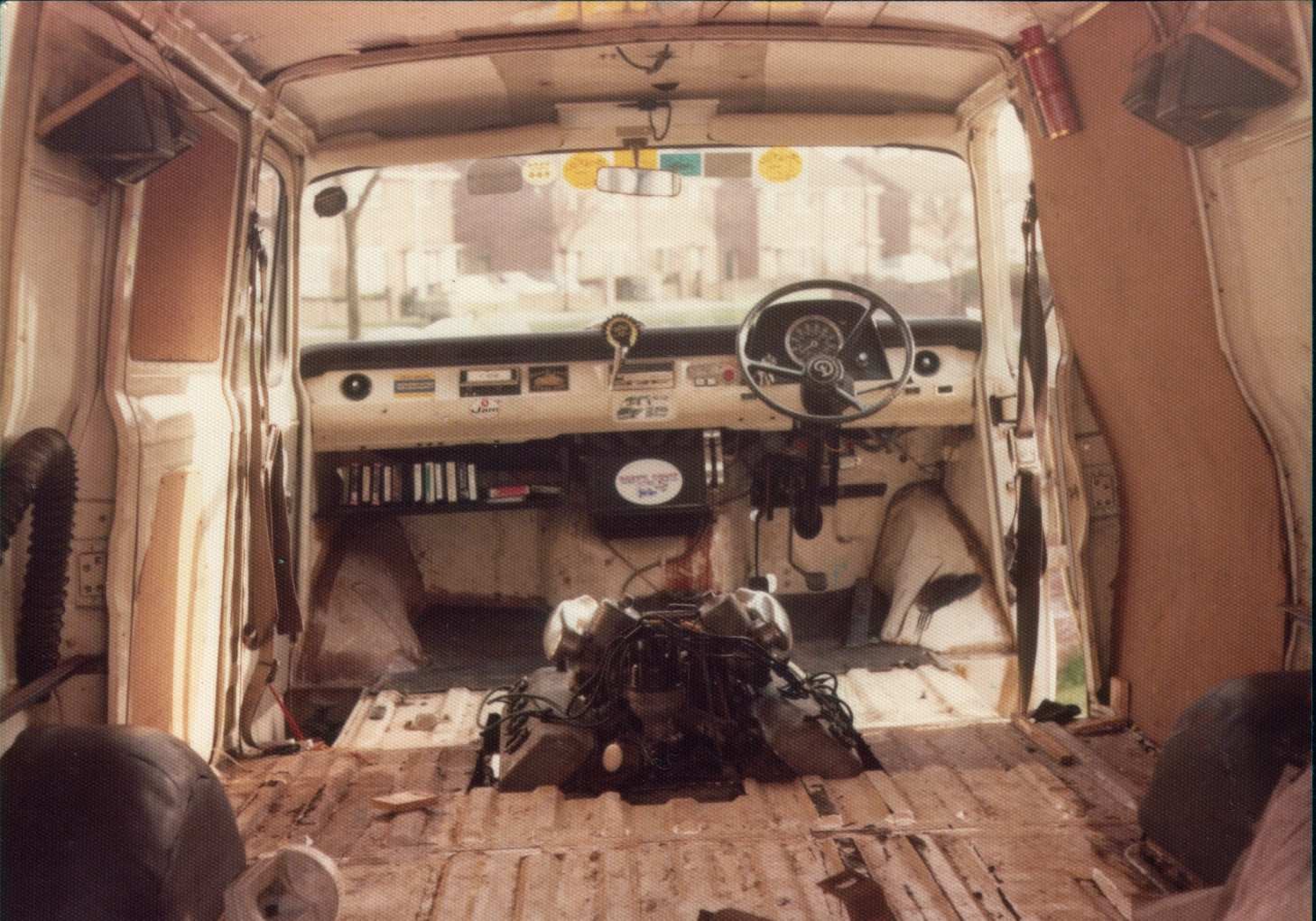
Inside the van from the rear
The big Daimler 4.5 (4.6) V8, was introduced in the DR450 Daimler Majestic Major saloon and DQ450 Limousine at the 1959 London Motor Show It was the big brother of Edward Turner’s 2.5 V8 fitted in the Daimler Dart SP250 in 1959 and after Daimler was absorbed by Jaguar in 1960, in the Daimler V8-250 based on the Jaguar MK2 saloon. Approx 2000 big V8s were made. Production ceased in 1968 when BLMC absorbed Jaguar.
Took me a little while to get it nailed in, with a few “insurmountable problems” as one might expect. One such problem was how to get movement from the throttle pedal to the carbs’ yoke. “Thinks: Hmmm its a long way and there’s no easy and smooth route,,,,,,,,Eureka !! Hydraulics!!” and so the throttle was hydraulically actuated.
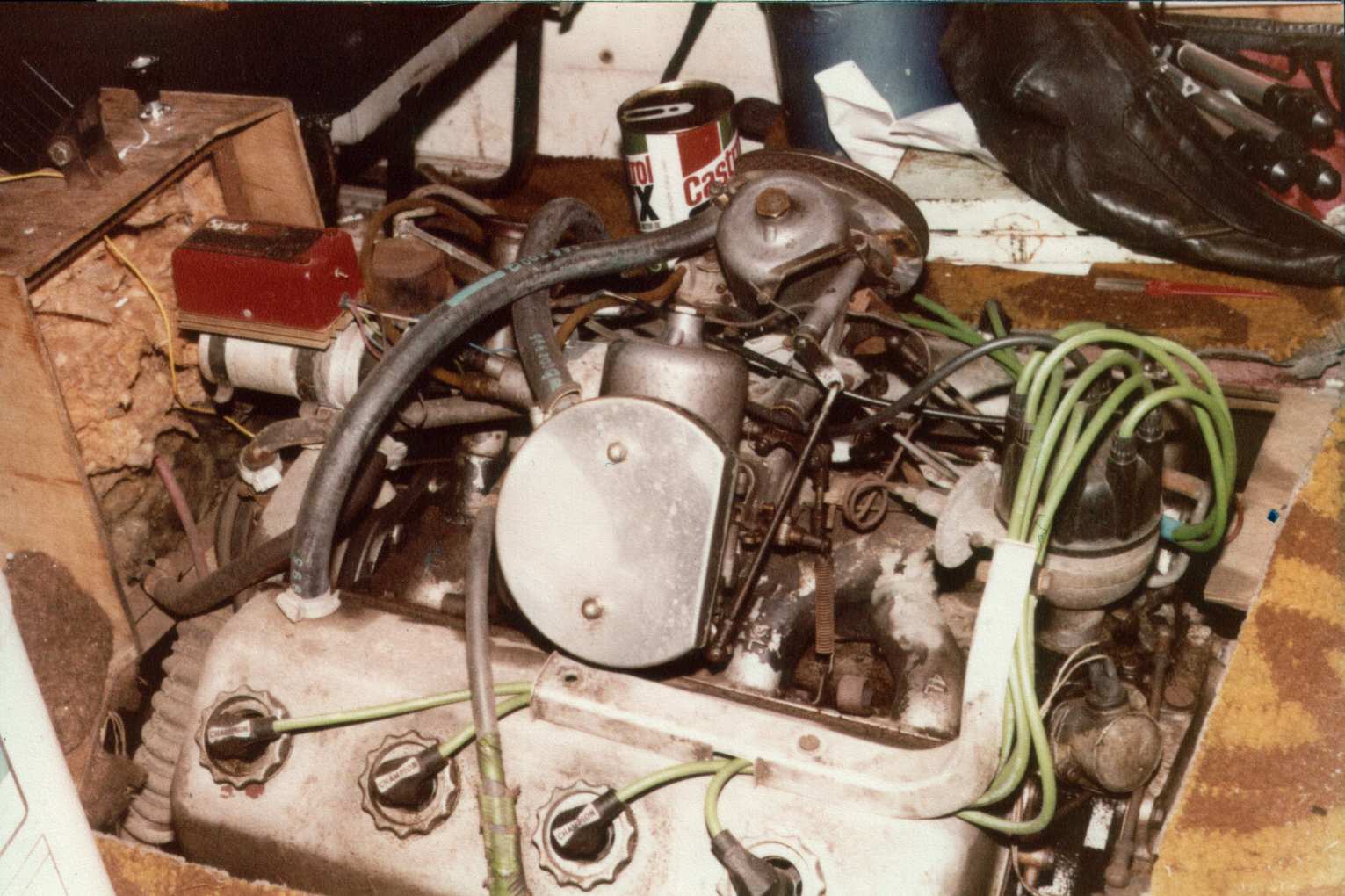
Engine installation
Then I had to find solutions to the ancillary issues: cooling, fuelling, re-arranging seat belt anchors, tachometer drive, speedo drive, braking. Spring rates were an issue; the 900kg transit back end being somewhat heavier than a Mk10!
The Mk 10 axle was not quite wide enough to enable the wheels to fit between the arches. At that time, there existed an “Engineering” firm called Street Rod Engineering. They (we were assured by one of the leading magazines of the time) could widen or shorten your Jag back end wishbones and driveshafts. “They are as strong as they were originally” they assured me.
I had 2” added to each driveshaft and wishbone, putting the XJ6 wheels exactly where I wanted them. Well, we used to cruise at about 100mph on the motorways, traffic permitting of course. When I dismantled this lot a couple of years later, the van having torn itself to pieces along the rotted out panel seams, I sold this axle to a friend who put it under a VW Van that he was Rover V8 powering. Not long after getting it on the road, one of the wishbones snapped!
What the “Engineers” at SRE had done, was just sleeved the tube, slid a 2” section of Jag wishbone on and butted them up. Then stick welded the butts together with no penetration prep and ground them down flush. The broken ends demonstrated that there was about 1/32 of welded metal out of the 5/16 or so that was available. If you want something doing,,,,etc.
Before I could insure this thing, I needed an Engineer’s Report.
Excerpts include-
Road Trial-”The engine has ample power to accelerate the Van fairly rapidly via the automatic transmission,,,,”
Remarks-”,,,The vehicle drives easily and smoothly with the fairly large Daimler engine and automatic transmission which are centrally mounted to improve weight distribution. Servo braking with front and rear discs provide firm and smooth braking with a high rate of retardation,,,,. The vehicle steers quite satisfactorily up to it’s maximum legal speed of 50mph.”(!)
Performance was “Adequate”. The Daimler saloon was just under 2 tons and 0-60 was reputed to be 9.6 secs. The transit was 1.7 tonnes,,, Weight distribution was 800kgFront/ 900kg rear and a fairly low polar moment of inertia, so it was quite nimble and accelerated and braked with some authority.
So there we are Gillie: up here in deep Red-neck Norfolk we could also turn out some pretty quick Transits!
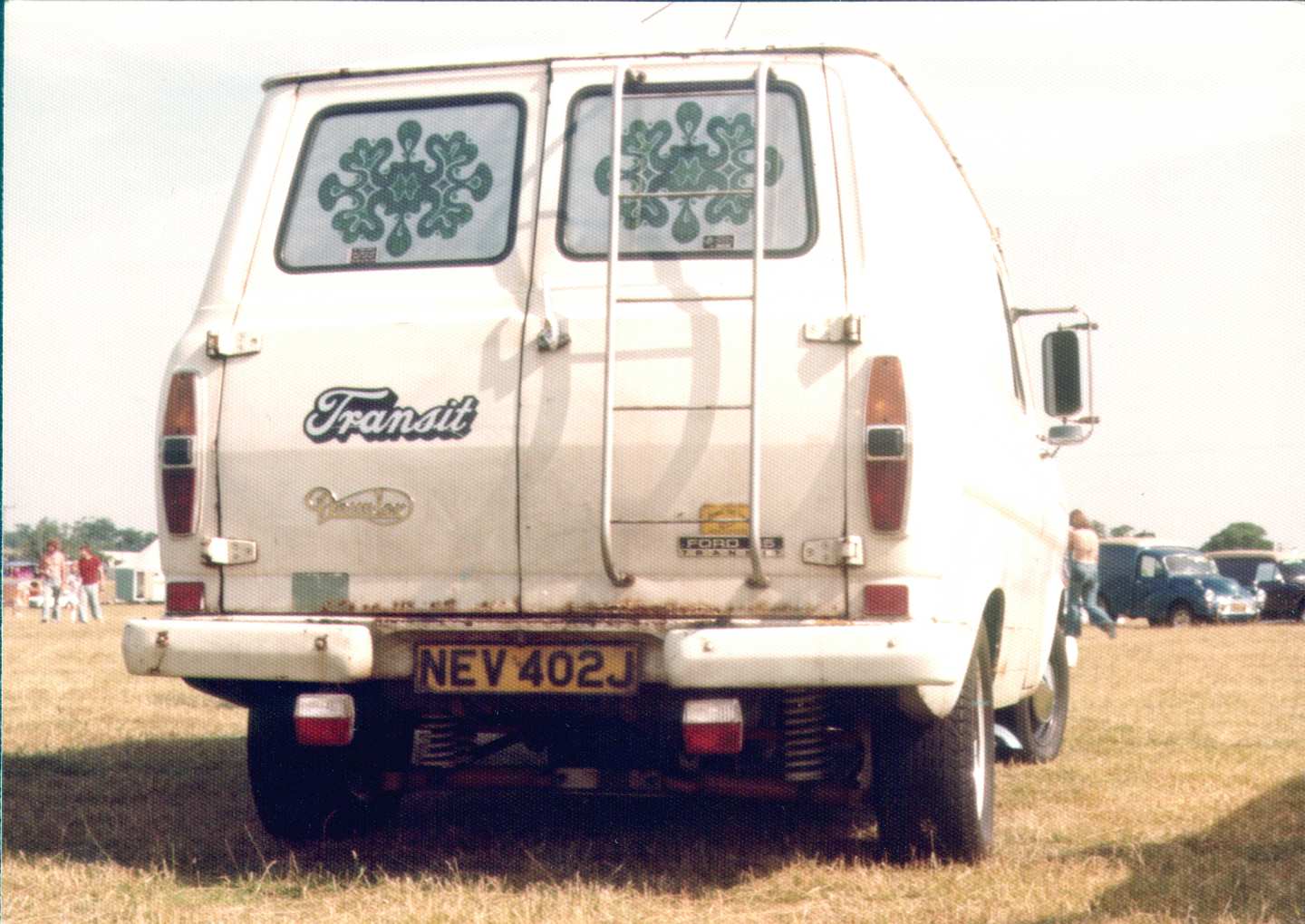
Daimler V8 Transit
In 2019, after suffering 36 years of angst, with “my” engine laying in the chicken shed of the bloke I sold it to, very poorly protected from the weather, I finally got my hands back on it, along with another dismantled short block which had I sold him. When I pulled the rocker covers off, I was presented with a sight not dissimilar to those we see on the News “Fisherman trawls up old WW2 Aircraft engine” kind of thing. Work is now underway to restore this lump. Currently it’s a rebuilt short block and I’m working to produce a pair of heads suitable for it.
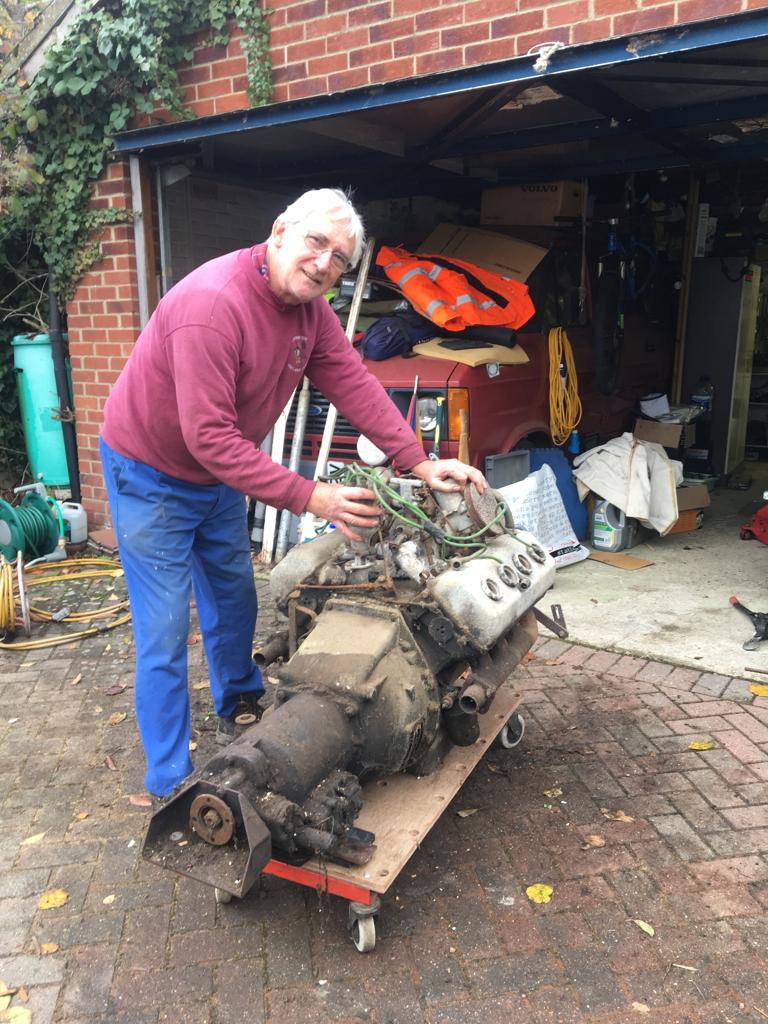
Paul with his reclaimed engine
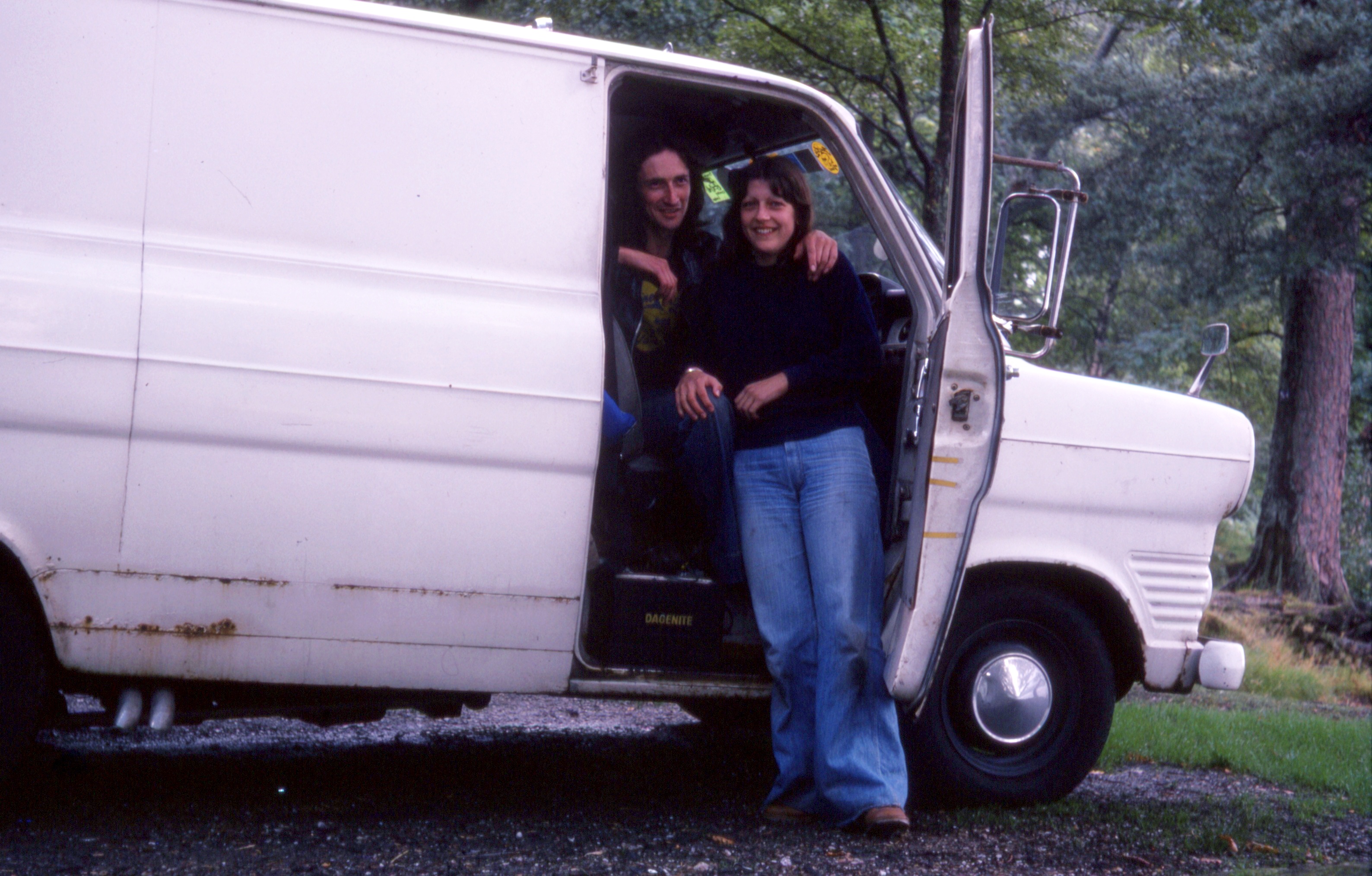
Paul, the Transit and his good lady
Copyright © 2011-2026 Fressingfield Oily Rag Club. All Rights Reserved.
GDPR Policy Club Rules Refund policy Stradbroke Map FAQ's Follow us Opens a new window
 Opens a new window
 Opens a new window
 Opens a new window